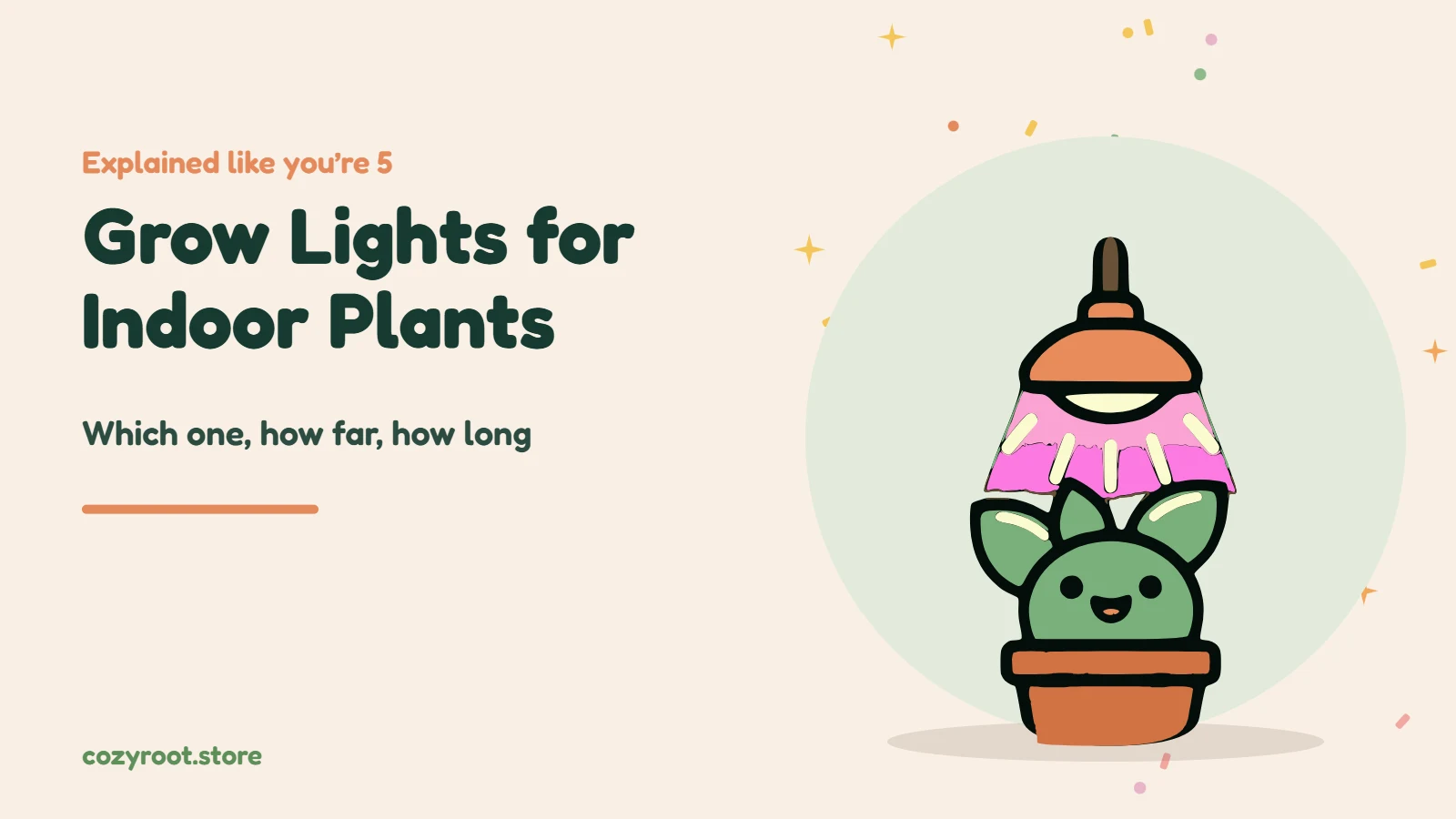
Grow Lights Explained Like You’re 5 (Your Plant Is Not Being Dramatic)
As an Amazon Associate, CozyRoot earns from qualifying purchases.
Sunshine is plant food. In winter, or in a dark apartment, the sun basically goes on vacation, and your plant starts stretching, fading and dropping leaves. It’s not being dramatic, it’s hungry! A grow light is personal sunshine for your plants. Let’s find the best grow lights for indoor plants without any confusing science words.
Quick answer: For most houseplants, a full-spectrum LED grow light is the best choice. Use a clip-on light for 1 to 3 plants, LED strip lights for shelves, or a grow bulb in a lamp you already own. Place it about 6 to 14 inches above the plants (check the product guide) and run it 10 to 14 hours a day on a timer, leaving them a dark rest at night.
Does My Plant Need a Grow Light?
Probably yes, if any of these sound familiar:
- Your room has no window, or only a north-facing one.
- Your plant is stretching tall and pale, leaning hard toward the window.
- New leaves are smaller than old ones, or growth has stopped.
- It’s winter and the days are short and gray.
- You want to grow herbs, succulents or seedlings indoors, which need lots of light.
If your plants are lush and growing in a bright window, you may not need one at all. Grow lights are helpers, not must-haves.
Grow Lights Explained Like You’re 5
What is a grow light?
A lamp made to give plants the kind of light they use to make food. A regular LED bulb lights up your room; a grow light is designed for plant needs.
What does “full spectrum” mean?
It means the light contains a balanced mix of colors, similar to daylight. Full-spectrum lights usually look white or warm white, so they blend into your home. Older purple and pink grow lights work too, but they make your living room look like a nightclub.
LED or regular bulbs?
Choose LED. LEDs use much less electricity, last a long time and stay cool, so they’re much less likely to scorch leaves than old incandescent bulbs.
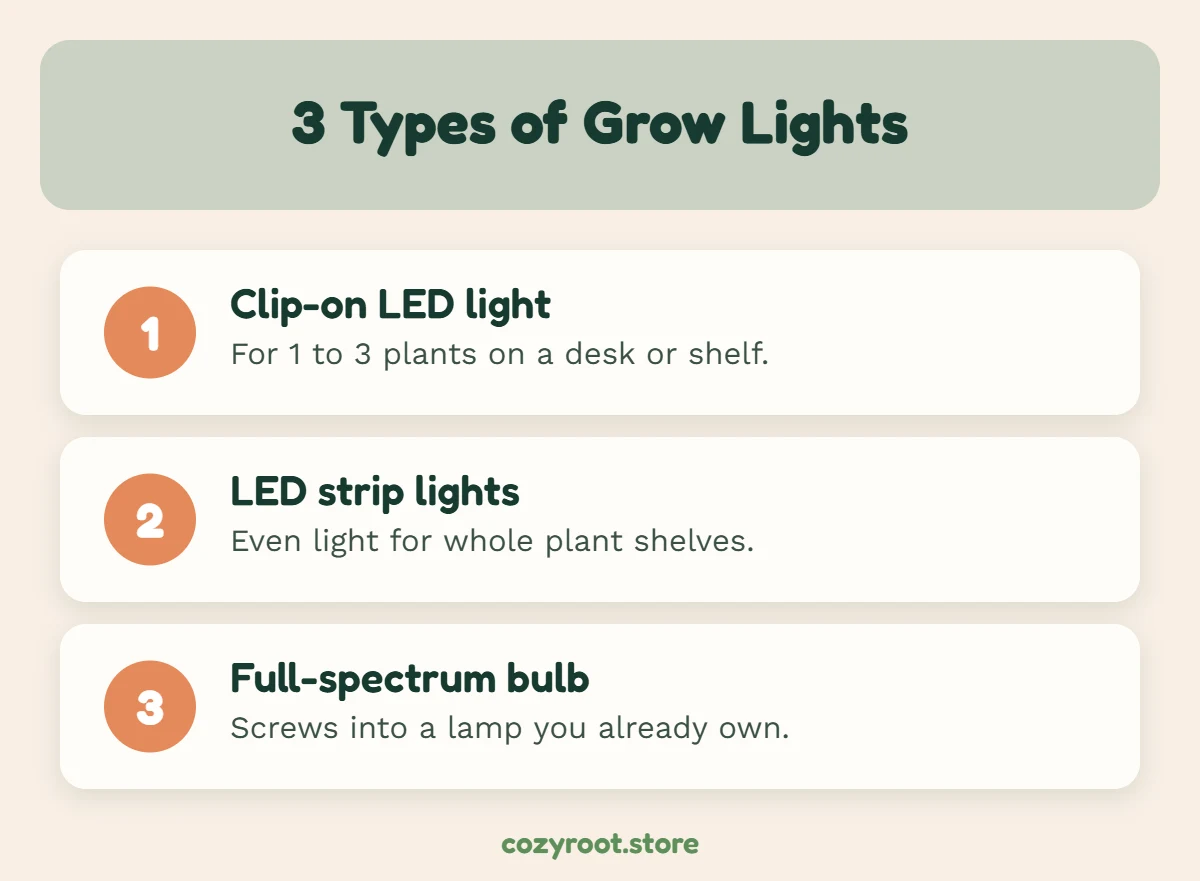
The 3 Types of Grow Lights (and Who They’re For)
| Type | Best for | Pros | Things to know |
|---|---|---|---|
| Clip-on LED grow light | 1-3 plants on a desk or shelf | Flexible arms, built-in timer on many models | Covers a small area |
| LED strip / T5-style bars | Plant shelves, seedlings, herbs | Even light across many plants, link together | Need a shelf to mount under |
| Full-spectrum grow bulb | A single floor plant in a lamp | Uses a lamp you already own, looks normal | One direction only |
Rooty’s picks: Most beginners love a clip-on light for one or two plants. Collectors with a plant shelf get the most value from strip lights. See Rooty’s grow light picks.
How to Use a Grow Light (Without Overthinking It)
How far away should a grow light be?
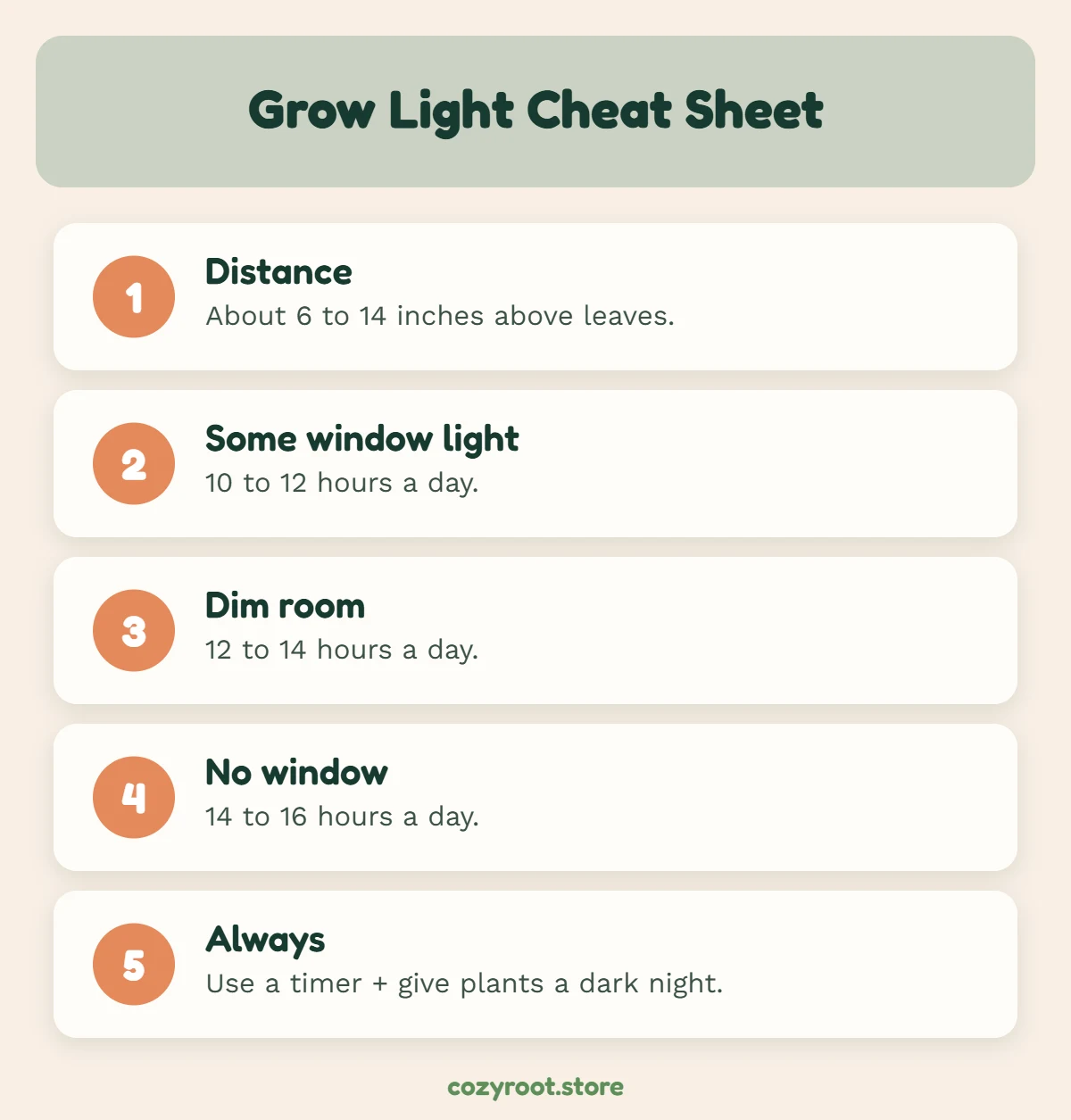
Most LED grow lights work well about 6 to 14 inches above the leaves. The Kentucky Living gardening column suggests 12 to 14 inches for most LED grow lights, but always check your product’s guide. Light gets much weaker as you move it farther away.
- Too close: bleached or crispy spots on top leaves.
- Too far: stretching and leggy growth.
How many hours a day?
The New York Botanical Garden suggests about 12 to 14 hours of supplemental light for plants that get some natural light, and more if there’s little or no daylight. Every plant also needs darkness to rest, so never leave lights on 24/7.
| Situation | Daily grow light time |
|---|---|
| Some window light, just boosting winter | 10-12 hours |
| Dim room, little natural light | 12-14 hours |
| No window at all | 14-16 hours |
| Seedlings and herbs | 14-16 hours |
Use a timer
A timer (many clip-on lights have one built in) keeps the schedule consistent, which plants love, and you’ll never forget to turn it on.
Point it down
Light should shine from above, like the sun. Lights aimed from the side make plants lean.
Do Indoor Plants Need Grow Lights in Winter?
Many do. Winter days are shorter and the sun is lower and weaker, especially through glass. Signs your plants want winter help: leaning, pale new growth and dropping lower leaves. Remember to water less in winter, too. Plants grow slower and the soil dries slower, so overwatering is just as dangerous as darkness.
Common Grow Light Mistakes
- Using a regular LED bulb. Choose one made for plants.
- Hanging it too high. Light strength drops fast with distance.
- Leaving it on all night. Plants need a dark period.
- Expecting instant results. Give your plants 2 to 4 weeks to respond with new growth.
- Forgetting to clean it. Dust on the light reduces its output.
Rooty says: I sunbathe indoors now. My leaves feel so happy. Think of it as a cozy lamp that also feeds your plants.
Signs Your Grow Light Is Working
After 2 to 4 weeks under a grow light you should notice:
- New leaves at normal size (or bigger) instead of tiny ones.
- Shorter, sturdier stems with less space between leaves.
- Better color, with variegated plants keeping their patterns.
- Less leaning toward the window.
If leaves look bleached or crispy on top, raise the light or shorten the hours. If plants are still stretching, move the light closer or extend the time a little.
Shop This Article
- Clip-on LED grow light: for single plants and desks. See grow lights
- LED strip lights: for shelves and seedlings. See grow lights
- Plant stands and shelves: make a cozy lit plant corner. See plant stands
- Seed starting trays: grow herbs under your new lights. See seeds
FAQ: Grow Lights for Indoor Plants
Will a grow light burn my plant?
Modern LED grow lights run cool, but placing them too close can still bleach leaves. Keep the distance recommended by the manufacturer and watch the top leaves.
Can I leave a grow light on all day?
Plants need a dark period. About 10 to 16 hours of light depending on your situation is plenty; use a timer.
Are purple grow lights better than white ones?
Not for houseplants. Full-spectrum white LEDs work very well and look much nicer in your home.
Can a grow light replace sunlight completely?
Yes, for many houseplants. With the right light and timer, low and medium light plants can live happily in a windowless room.
Do grow lights use a lot of electricity?
LED grow lights are energy efficient. A small clip-on light uses about as much power as a regular LED lamp.
What color light is best for houseplants?
Full-spectrum white light, often labeled around 5000K to 6500K, works well for most houseplants and looks natural in your home.
Keep Growing With Rooty
Your plant isn’t dramatic, it’s just asking for a little more sunshine. Start with one clip-on light, set a timer, and watch the new leaves come in bigger and brighter.
Next reads: 8 low light indoor plants and the beginner plant shopping list.
Not sure which plant is right for you? Answer a few fun questions and Rooty will match you with the perfect plant + care routine. Made for beginners, loved by plant parents.