
Propagation 101: How to Propagate Plants in Water (and Make New Plants for Free)
As an Amazon Associate, CozyRoot earns from qualifying purchases.
You can make more plants. For free. Propagation is plant magic, but make it science. If you’ve been wondering how to propagate plants, water propagation is the easiest place to start: all you need is a healthy plant, clean scissors and a glass of water. Then you get to watch roots grow like a tiny science show on your windowsill.
Quick answer: To propagate a plant in water, cut a healthy stem about 1/4 inch below a node (the bump where a leaf meets the stem), remove any leaves that would sit underwater, place the node in clean water, and keep it in bright, indirect light. Change the water every few days and pot it up when roots are 2 to 3 inches long.
What Is a Node (and Why Does It Matter)?
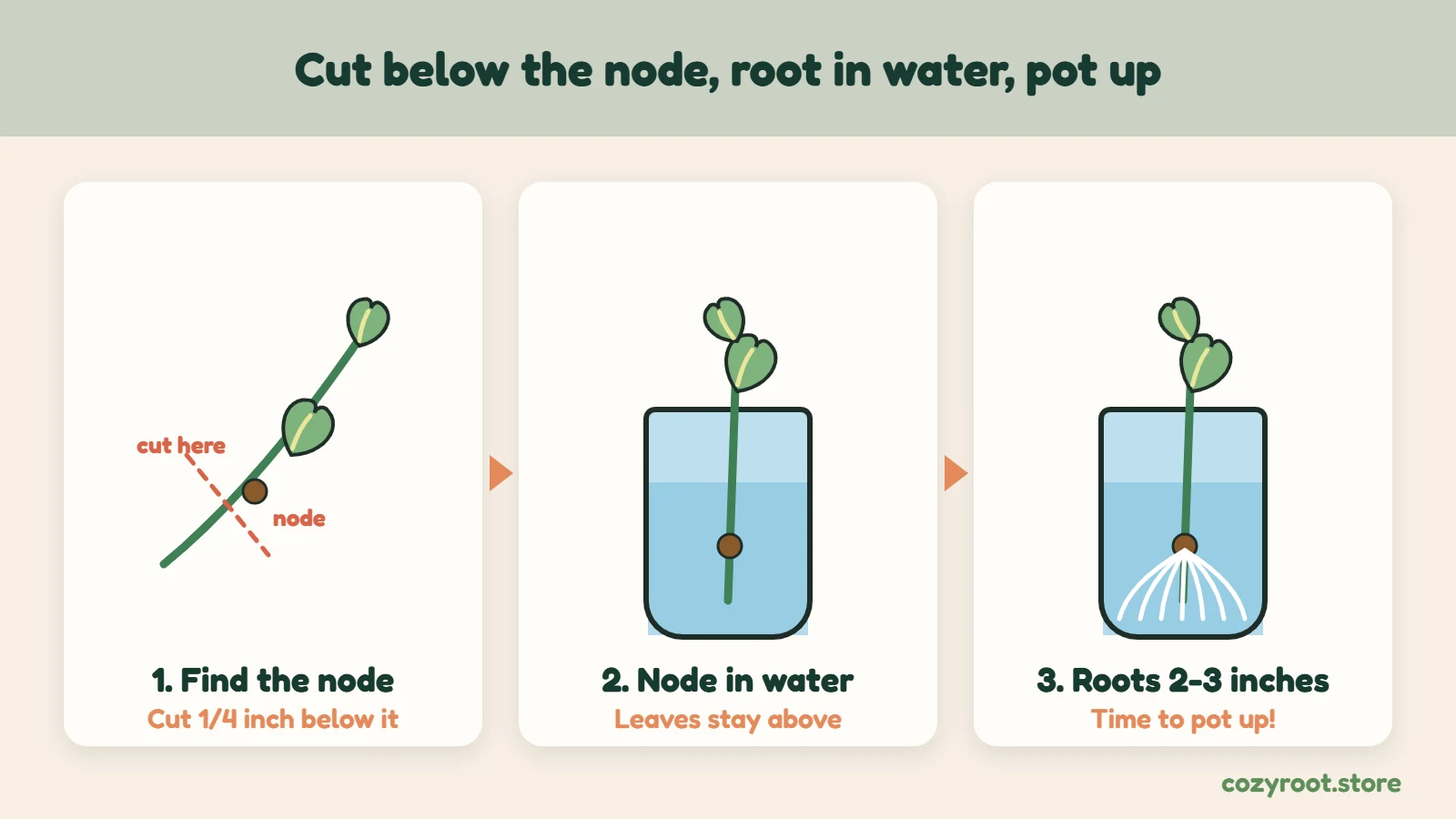
A node is the little bump on the stem where a leaf attaches. It’s packed with growth cells, so it’s where new roots and shoots appear. On pothos and philodendron, you’ll often see a small brown nub at the node, called an aerial root, which is a head start on rooting.
This is the #1 rule of propagation: no node, no roots. A leaf with only its stalk (the petiole) might sit happily in water for months, but it will never become a new plant.
How to Propagate Plants in Water: Step by Step
Step 1: Pick a healthy stem
Choose a vine or stem with healthy green leaves, no yellowing and no pests. Spring and summer are best because plants are actively growing, but you can propagate year-round. It just takes longer in winter.
Step 2: Find the node
Look for the bump where a leaf meets the stem. Each cutting needs at least one node; two or three nodes give you a fuller new plant.
Step 3: Cut below the node
Using clean, sharp snips, cut about 1/4 inch below a node. Clean blades prevent spreading bacteria. A cutting 4 to 6 inches long is perfect.
Step 4: Remove the lower leaves
Any leaf that would sit underwater will rot, so snip it off. Keep one or two leaves above the waterline.
Step 5: Pop it in water
Place the cutting in a clear glass, jar or propagation station so the node is underwater and the leaves are above it. Room-temperature tap water is fine for most plants.
Step 6: Give it bright, indirect light
More light means faster roots, but harsh direct sun can cook a cutting. A bright windowsill out of direct rays is ideal.
Step 7: Change the water every few days
Fresh water keeps oxygen levels up and stops bacteria from building up. Rinse the jar if it looks cloudy.
Step 8: Pot up when roots are 2 to 3 inches long
Plant your rooted cutting in a small pot with drainage and fresh indoor potting mix. Keep the soil lightly moist for the first couple of weeks while the water roots adjust to soil.
How Long Do Cuttings Take to Root?
| Plant | Roots appear | Ready to pot up | Difficulty |
|---|---|---|---|
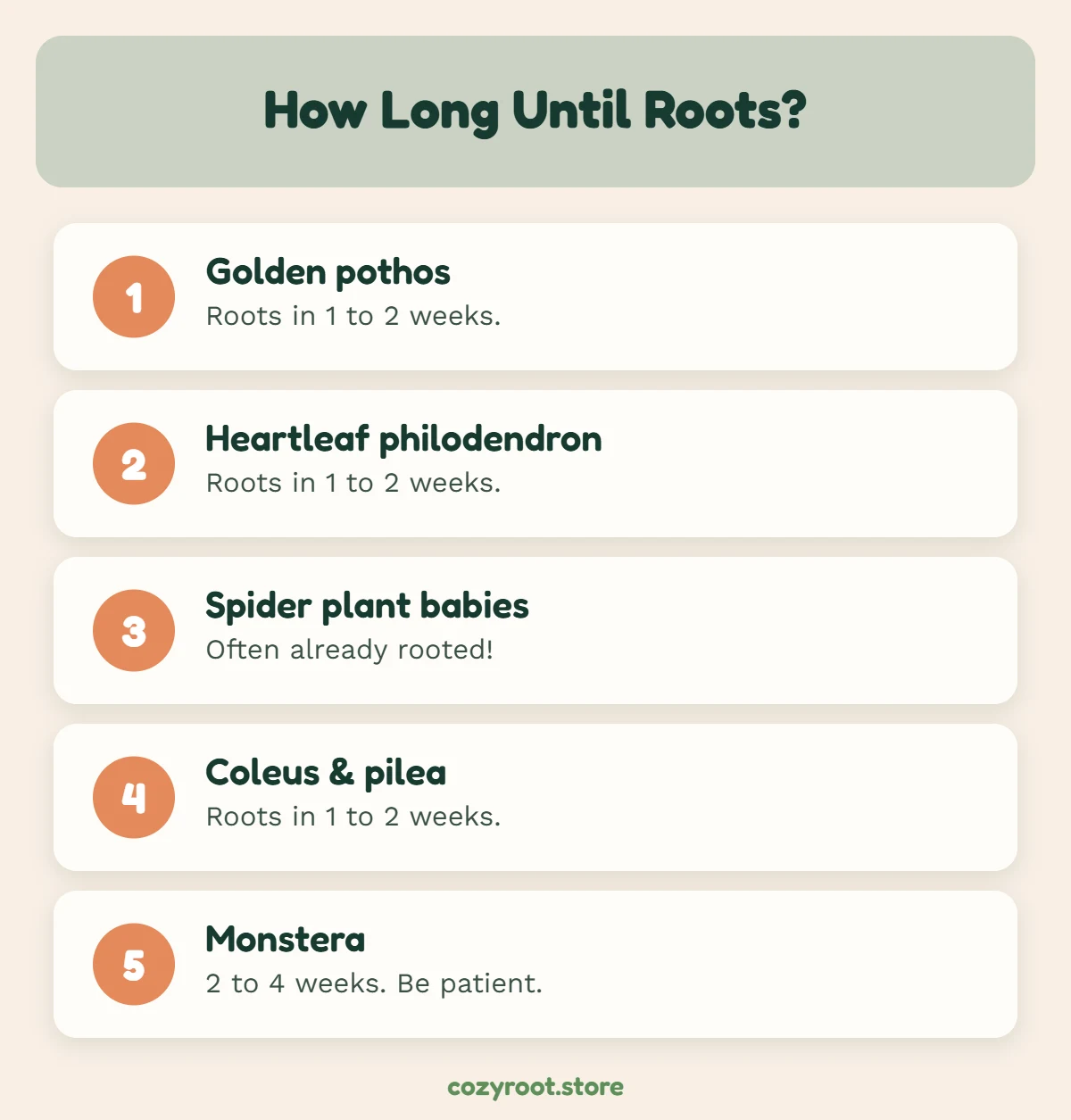
| Golden pothos | 1-2 weeks | 3-5 weeks | Super easy |
| Heartleaf philodendron | 1-2 weeks | 3-5 weeks | Super easy |
| Tradescantia (wandering dude) | Within 1 week | 2-3 weeks | Super easy |
| Spider plant babies | Days (often already rooted) | 1-2 weeks | Super easy |
| Monstera | 2-4 weeks | 6-8 weeks | Easy, be patient |
| Coleus | 1-2 weeks | 3-4 weeks | Easy |
| Pilea babies | 1-2 weeks | 3-4 weeks | Easy |
Times are estimates. Warmth and brighter light speed things up; cold rooms slow them down.
Rooty’s Favorite Plants to Propagate
Pothos
Nearly foolproof in water. Snip a vine, find the nodes, and you’ll see roots within a couple of weeks. You can even put rooted cuttings back into the mother pot to make it fuller.
Monstera
Slower, but spectacular. Make sure your cutting includes a node, ideally with an aerial root, or it won’t grow. Patience is the secret ingredient.
Spider Plant
The ultimate cheat code: the dangling babies often already have little roots. Snip and pop them in water, or pin them onto soil while still attached to the mother plant.
Philodendron
Same method as pothos and just as easy. Heartleaf philodendron is a great first project.
Troubleshooting: Why Isn’t My Cutting Rooting?
- No node: the most common reason. Check that your cutting has at least one node underwater.
- Not enough light: move it somewhere brighter (but not into harsh sun).
- Cold room: cuttings root much slower in winter.
- Mushy, brown stem: that’s rot. Trim above the soft part, just below a healthy node, and start again in fresh water.
- Yellow leaf: one yellow leaf is normal while the cutting puts energy into roots. See my yellow leaves guide if it spreads.
Water vs. Soil Propagation
| Water propagation | Soil propagation | |
|---|---|---|
| Best for | Beginners, watching roots grow | Skipping the transition step |
| Speed | Often faster to see roots | Similar, but hidden |
| Effort | Change water every few days | Keep soil lightly moist |
| Risk | Rot if water gets dirty | Drying out or overwatering |
| Extra step | Move to soil later | None |
Rooty’s tip: Pinning a pothos vine onto soil in a small pot while it’s still attached to the mother plant is called layering. It’s almost impossible to fail.
Shop This Article
- Propagation station: a pretty stand with glass bulbs that turns cuttings into decor. See propagation stations
- Micro-tip snips: clean, precise cuts right below the node. See pruning tools
- Indoor potting mix: for potting up rooted cuttings. See soil picks
- Small ceramic pots: cozy first homes for new plants. See ceramic pots
FAQ: How to Propagate Plants
How often should I change the water when propagating?
Every 3 to 7 days, or sooner if it looks cloudy. Fresh water keeps cuttings healthy and oxygenated.
Can I propagate a pothos leaf without a node?
No. A pothos leaf without a node can’t grow roots or new stems. Always cut just below a node.
When should I move my cutting from water to soil?
When the roots are about 2 to 3 inches long. Keep the soil lightly moist for the first couple of weeks while it adjusts.
Can plants live in water forever?
Some, like pothos, can live in water long-term if you change the water regularly and add a very diluted fertilizer. Most grow bigger and stronger in soil.
Is it better to propagate in water or soil?
Water is easier for beginners because you can watch the roots grow. Soil propagation skips the transition step. Both work.
Can I propagate plants in winter?
Yes, but expect slower rooting. Give cuttings your brightest window or a grow light, keep them away from cold glass, and be patient. Roots that take two weeks in summer might take four or more in winter.
Keep Growing With Rooty
One healthy plant can become a whole jungle (and lots of gifts for friends). Start with pothos, watch those first roots appear, and you’ll be hooked.
Next reads: Gifts for plant lovers under $30 and 9 plants you can’t kill.
Not sure which plant is right for you? Answer a few fun questions and Rooty will match you with the perfect plant + care routine. Made for beginners, loved by plant parents.